Kolams
37 Kolams · with step-by-step drawing
Today's kolam

Four-Dot Idaipulli Kolam
Idaipulli Kolams. The dots of each row sit in the gaps between the dots of the row before it.
How to draw itWhat is a kolam?
The Tamil word kolam means beauty. Early in the morning, people sweep the doorstep, sprinkle water and draw a kolam with rice flour. This has been a custom in Tamil homes for a very long time.
One reason given for this custom is that the rice flour becomes food for ants, birds and other small creatures. In the month of Margazhi, many towns and villages draw big kolams and place a pumpkin flower in the middle.
- Pulli Kolam (dot kolam)
- First you place dots in rows. Then you draw lines that join the dots or go around them.
- Sikku Kolam
- A line that goes around the dots without touching them. A single line that ends where it started is thought of as special. It is also called Kambi Kolam.
- Padi Kolam
- Lines drawn in layers, like steps. Many homes draw it on Fridays and on special days.
- Maa Kolam
- Rice is soaked and ground into a paste, and a piece of cloth dipped in it is used to draw the kolam. It stays for many days after it dries.
- Flower Kolam, Colour Kolam
- A kolam filled with flower petals or coloured powders. You see it most on festival days.
For Beginners
Easy kolams with only a few dots. Start with these to get used to drawing.
 Three-Dot Kolam
 Four-Dot Kolam
 Five-Dot Diamond Kolam
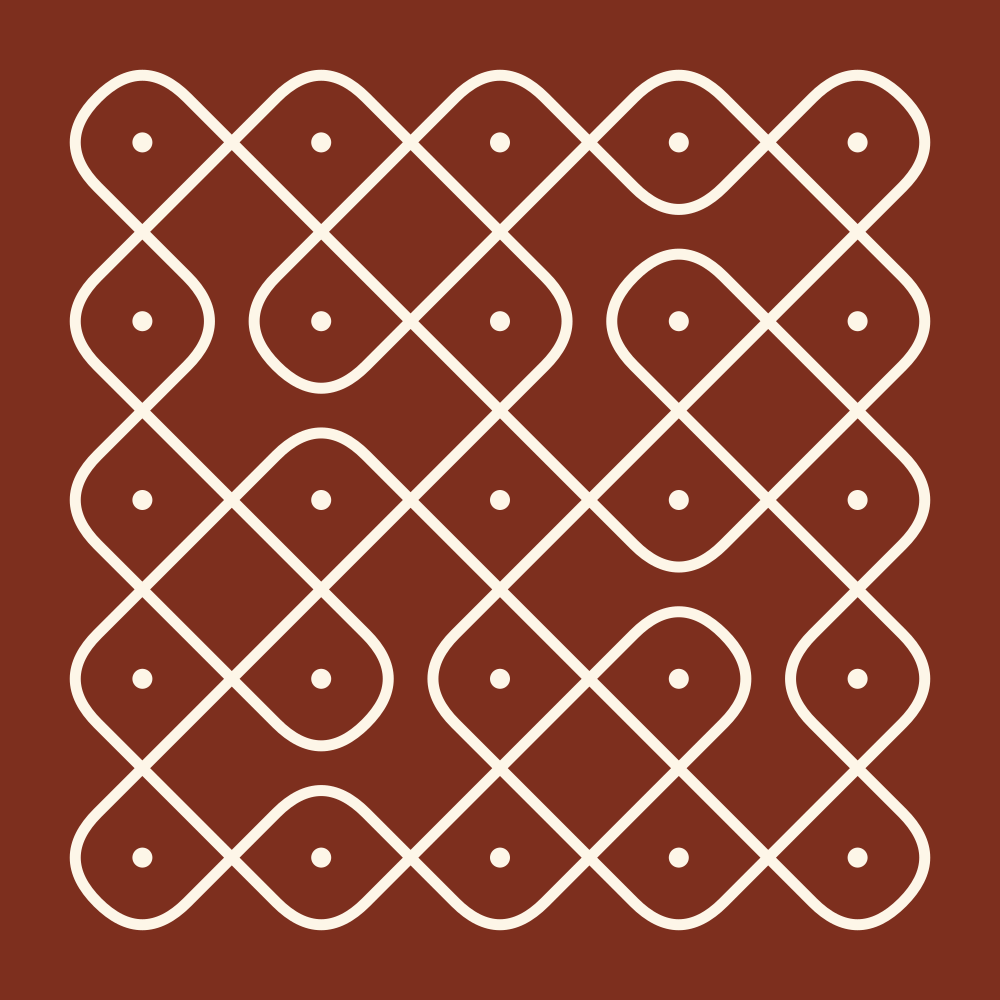 Five-Dot Kolam
 Five-Dot Plus Kolam
Sikku Kolams
Kolams made of one line that goes around each dot without touching it.
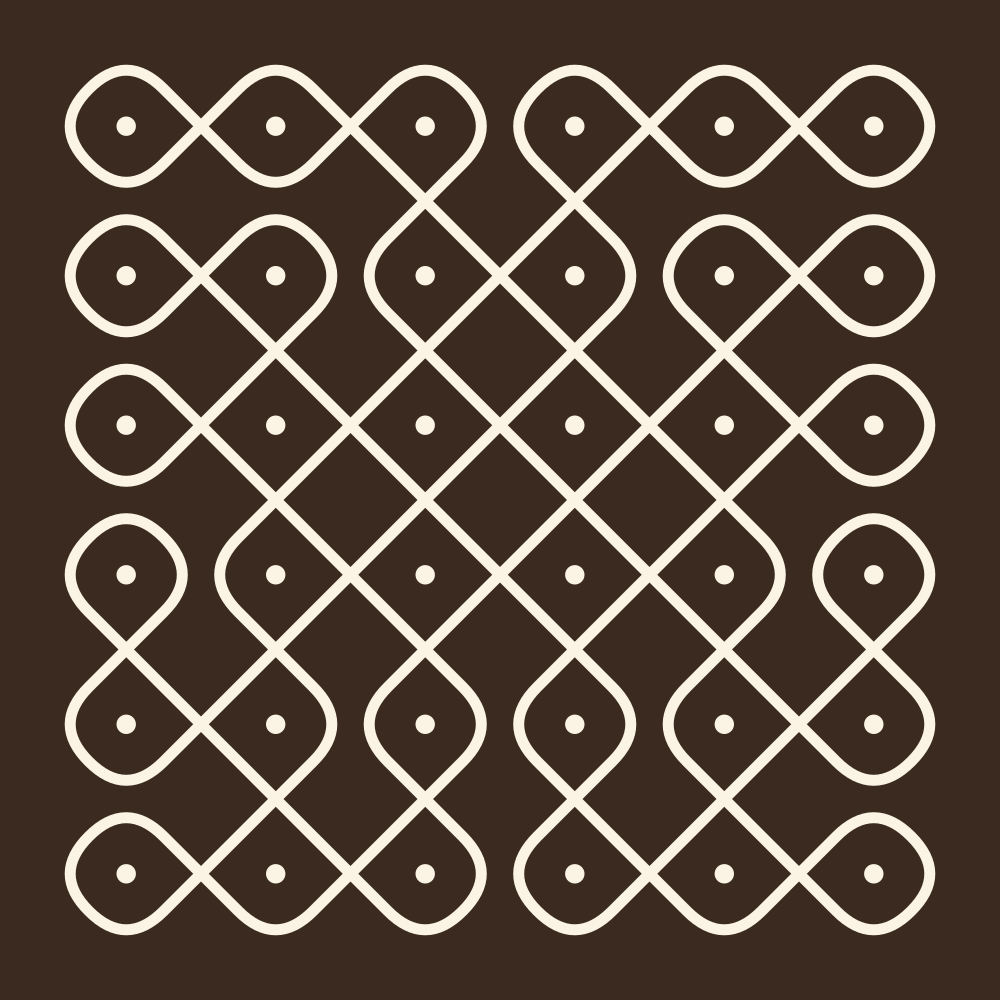 Six-Dot Kolam
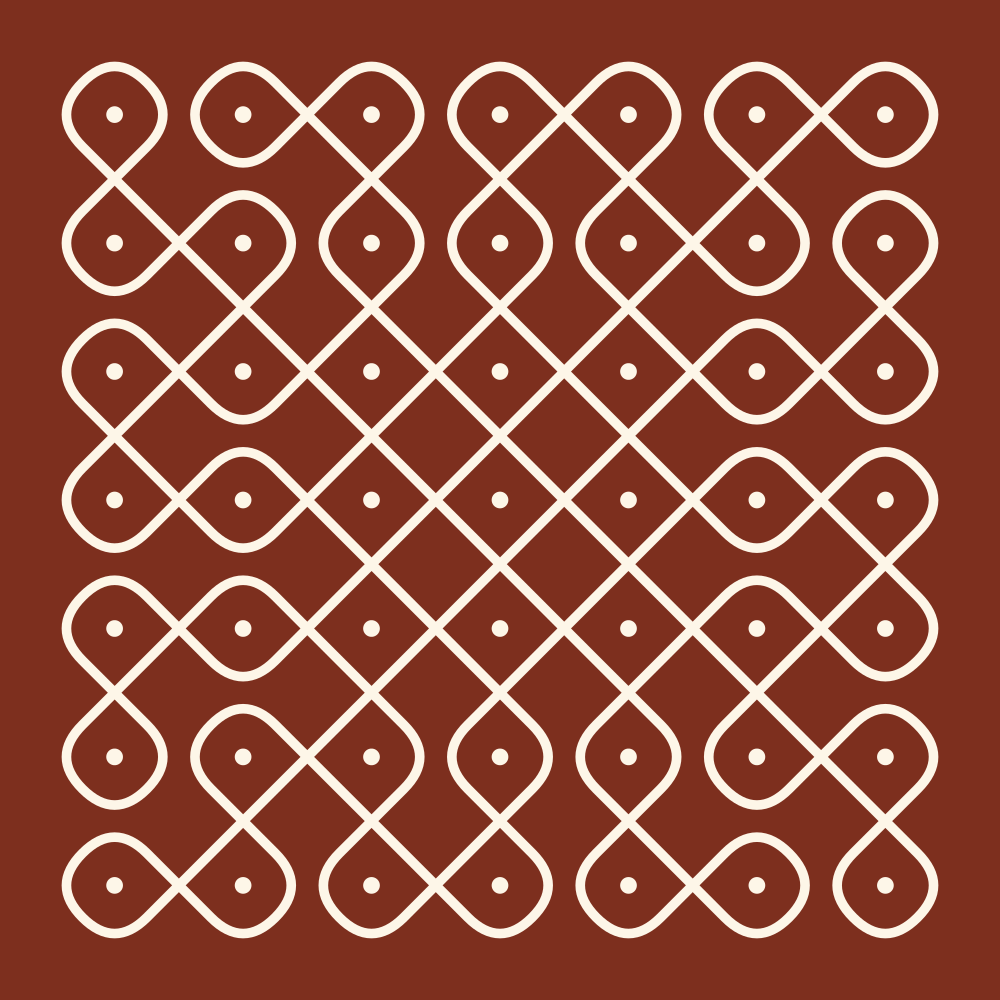 Seven-Dot Kolam
 Seven-Dot Diamond Kolam
 Seven-Dot Octagon Kolam
 Seven-Dot Star Kolam
 Nine-Dot Diamond Kolam
 Nine-Dot Plus Kolam
Idaipulli Kolams
The dots of each row sit in the gaps between the dots of the row before it.
 Five-Dot Idaipulli Kolam
 Six-Dot Idaipulli Kolam
 Seven-Dot Square Kolam
 Nine-Dot Square Kolam
 Nine-Dot Octagon Kolam
Margazhi Kolams
Big kolams that fill the doorstep in the month of Margazhi. They have more dots and take more time.
 Margazhi Nine-Dot Kolam
 Margazhi Eleven-Dot Kolam
 Margazhi Diamond Kolam
 Margazhi Star Kolam
 Margazhi Big Kolam
Padi Kolams (step kolams)
Lines drawn in layers, like steps. A band of red earth (semman) is often drawn between them.
 Three-Layer Padi Kolam
 Four-Layer Padi Kolam
 Many-Step Padi Kolam
Flower Kolams
Petals that open out from the centre. You can fill them with coloured powder or flower petals.
 Eight-Petal Flower Kolam
 Twelve-Petal Flower Kolam
 Sixteen-Petal Flower Kolam
 Colourful Flower Kolam
Festival Kolams
Kolams with pictures that suit each festival day.
 Pongal Pot Kolam
 Sun Kolam
 Karthigai Lamp Kolam
 Deepavali Lamp Kolam
 Lotus Padi Kolam
 Lotus Flower Kolam
 Krishna's Feet Kolam
These kolams are not copies of old pictures. They are drawn on this site by following the usual rules for drawing a kolam. The names are only there to help you tell them apart. The way people draw kolams differs from family to family and from place to place.